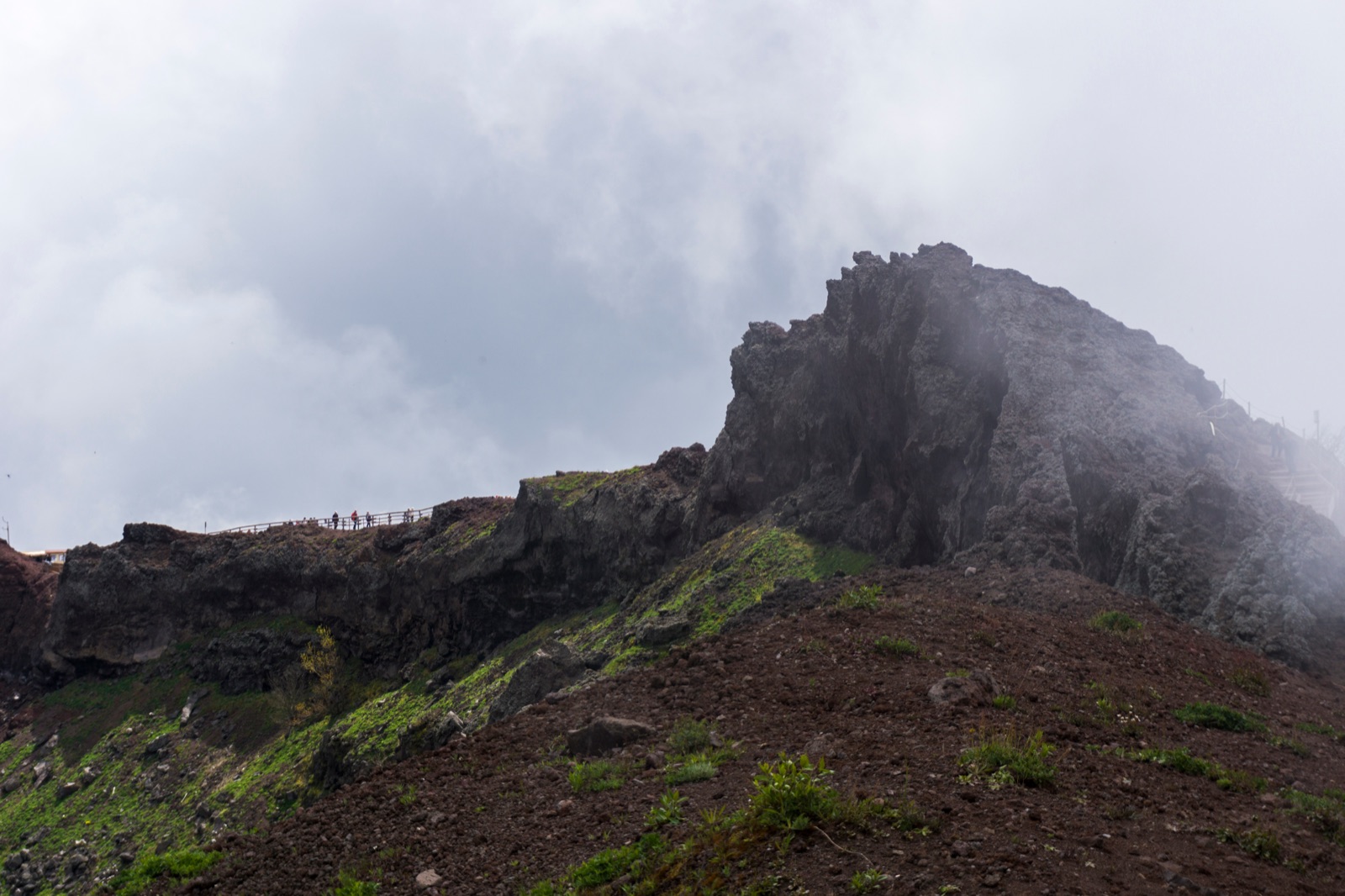
Vesuvius and Pompeii in One Day: Tours, Timing and What to Wear
Vesuvius and the cities it buried belong together. Standing on the rim of the crater in the morning and walking the streets of Pompeii in the afternoon — or the other way round — is one of the great days out in Italy, and it is entirely possible in a single day. It is also a long day, with a timed crater ticket, two separate sites and a fair amount of travel to fit together.
This guide compares the ready-made combined tours with doing it yourself, explains the timing that works, and covers the seasons, the weather and what to wear for a day that goes from sea-level ruins to a volcanic rim.
Why the two belong together
It is worth pausing on why this combination is so popular, because it shapes how to plan the day.
From the crater rim, on a clear day, you look down over the whole landscape the eruption changed: the towns strung along the coast, the Gulf of Naples and the plain where Pompeii lies. From the streets of Pompeii, you look up at the mountain that buried them. Seeing one without the other tells half the story; seeing both on the same day, while the view from the top is still fresh in your mind, makes the ruins far more vivid.
That is also why the order matters. Going up first lets you read the ruins in the afternoon with the volcano in mind. Going to the ruins first and then climbing the crater works too, but it is harder to fit around the last entry, and you arrive at the top tired.
Two ways to do it
A combined tour handles the transport, the order of the day and usually the tickets. It is the easy option, especially from Naples or Sorrento.
Doing it yourself by train and bus gives you control over the timing and the time spent at each site, at the cost of planning the connections and booking the crater slot to fit.
Neither is wrong. The deciding questions are where you are staying, how much you want to see of the ruins, and how much you enjoy planning.
The combined tours
Vesuvius and Pompeii from Naples
The round-trip day from Naples takes about 6 hours. The bus drops you at about 1,000 m for the crater walk, with free time at the top, and then continues to Pompeii, where you explore the ruins with an audio guide. It is the most efficient way to see both from Naples, and it fits into a day with time left over in the evening.
Pompeii, Herculaneum and Vesuvius in one day
For those who want all three, the full-day tour from Naples takes 7.5–8.5 hours. A minibus takes you first to the Great Cone of Vesuvius, then to Pompeii with an audio guide, and finally for a walk around Herculaneum. It is a lot for one day, but Herculaneum is compact, and seeing it alongside Pompeii shows two very different sides of the same disaster.
Pompeii and Vesuvius from Sorrento, with lunch
From Sorrento, the small-group day takes about 8 hours: pickup from your accommodation by van, a two-hour semi-private guided tour of Pompeii, lunch at a local osteria and a visit to Vesuvius National Park. With a guide at Pompeii rather than an audio guide, and lunch included, it is the most relaxed of the combined options.
Just the transfer
If you want to handle Pompeii yourself but not the volcano, a transfer from Pompeii with park entry — an air-conditioned minibus and the national park ticket, about 3 hours in total — or a transfer and entry from Pompeii or Naples does the mountain for you and leaves the ruins to you.
The tours page lists them all with live prices and availability.
Doing it yourself
The route
The Circumvesuviana railway on the Naples–Sorrento line is the backbone of any do-it-yourself day:
- Pompeii and Vesuvius: take the Circumvesuviana to Pompei Villa dei Misteri, near the ruins, and use EAV bus 808 from Pompeii to the Quota 1000 square at the start of the crater path. The bus takes about 55–70 minutes and runs roughly every 60–120 minutes.
- Herculaneum and Vesuvius: take the Circumvesuviana to Ercolano Scavi and the private Vesuvio Express shuttle from the station square up to the entrance at 1,000 m. Bus 808 does not stop at Ercolano Scavi.
The crater ticket
The crater ticket is the fixed point of the day. It is sold only online, entry is in groups of 60 visitors every 10 minutes, and you may enter up to 120 minutes before or after the time on your ticket. Tickets cannot be changed or cancelled, so plan the day first and book the slot second. Our guide to crater tickets and the Gran Cono path has the details.
Which order: volcano first or ruins first?
Volcano first is usually the better plan:
- The last entry to the crater is as early as 15:00 in winter, so leaving it until the afternoon squeezes the day.
- If a weather alert closes the path, you find out early and can spend the rest of the day at the ruins.
- The crater walk is the more tiring part. Doing it with fresh legs and then strolling through the ruins is easier than the reverse.
Ruins first can work in summer, when the last entry to the crater is as late as 18:00, and if you want to be at the archaeological site when it opens. Just make sure the bus times and the crater window line up.
A sample do-it-yourself day
- Morning: train to Pompei Villa dei Misteri, bus 808 up the mountain, crater walk (about 3 hours there and back).
- Early afternoon: bus 808 back down to Pompeii, lunch.
- Afternoon: the ruins of Pompeii, for as long as you have energy.
- Evening: train back to Naples or Sorrento.
The same shape works from Ercolano with the Vesuvio Express and Herculaneum, which is smaller and easier to fit into an afternoon.
Pompeii or Herculaneum?
If you only have time for one site alongside the crater, the choice depends on what you want.
Pompeii is the famous one: a whole Roman town, large enough to take most of a day on its own. Combined with Vesuvius, you will see a selection of it rather than all of it. An audio guide or a guided tour helps you focus on what matters.
Herculaneum is smaller and better preserved in places. It is easier to see properly in an afternoon, which makes it a strong partner for the crater if you are travelling by train through Ercolano.
If you have two days, give each site its own day and add the crater to the lighter one.
If the crater is closed on the day
Weather alerts close the crater path, and on a combined day that is the part most likely to fall through. Having a plan B turns a disappointing morning into a good day anyway.
- Swap the order and extend the ruins. Spend the whole day at Pompeii rather than half of it. It is large enough to fill the time, and you will see parts that a half-day visit skips.
- Add Herculaneum. If you were only planning Pompeii, a closed crater leaves room for Herculaneum too, a short train ride away on the same Circumvesuviana line at Ercolano Scavi.
- Claim your refund. If you bought the crater ticket on the park’s own site and the path was closed for weather, you are entitled to a refund under the park’s rules. If you booked a tour, its own cancellation terms apply.
- Try again on another day. Tickets can be bought up to 30 days ahead, so if you have time left in the area, a new slot on a clearer day is often available.
Visiting with children
A combined day is a lot for young children, but it can work well with a little planning.
- Put the crater first, while they have the most energy. The walk is about 3 hours there and back on loose gravel, which is tiring for small legs.
- Book the free tickets correctly. Children entitled to a free crater ticket must be booked together with at least one paid ticket, up to 4 free tickets for each paid one.
- Keep Pompeii short and focused. Choose a handful of highlights rather than trying to see everything; an audio guide or a guided tour helps.
- Consider Herculaneum instead of Pompeii. Its smaller size suits a tired family in the afternoon.
- A tour with pickup removes the transport stress, which is often what wears families down the most.
Food and breaks
Neither the crater path nor the ruins are places to rely on finding a good lunch at the right moment, so build the day around a proper break.
- On a do-it-yourself day, the natural lunch stop is in Pompeii or Ercolano between the volcano and the ruins, when you come down on the bus or shuttle.
- On the Sorrento tour, lunch at a local osteria is included, which is one of the reasons it is the most relaxed of the combined days.
- Carry water and a snack for the crater walk regardless. The path has little shade and nowhere to buy anything once you are through the gate.
How much of Pompeii will you see?
Honestly, not all of it — and that is fine. Pompeii is a whole city, and even a full day there only scratches the surface. On a combined day, the aim is to see the essentials well rather than everything in a rush:
- With an audio guide (as on the combined tour from Naples), you can follow a set route through the main streets, houses and public buildings at your own pace.
- With a guide (as on the Sorrento tour, with its two-hour semi-private tour), you get context and stories you would miss on your own, in a fixed time.
- On your own, pick a route in advance. Wandering without a plan is enjoyable but wastes time you do not have on a combined day.
Seasons and weather
Opening hours
Crater visits start at 9:00. The last entry is 15:00 in January, February, November and December; 16:00 in March and October; 17:00 in April, May, June and September; and 18:00 in July and August. For a combined day, the summer months give you by far the most room.
Summer
Summer is the easiest season to combine the two, thanks to the long days and late last entry. The challenge is heat: the crater path has little shade, and the ruins can be baking in the middle of the day. Start early, carry water, and use the middle of the day for lunch and shade.
Autumn and winter
In autumn and winter it is colder at the crater than at the foot of the volcano, and the wind can rise suddenly. The days are shorter and the last entry earlier, so volcano-first is almost essential. The upside is fewer people at both sites.
Weather closures
During a weather alert issued by the civil protection of the Campania Region, access to the crater path may be closed. If it is, crater tickets bought on the park’s site are refunded — refunds are given only if the path is closed for bad weather or force majeure. Tours set their own terms; check them before you book.
What to wear
A combined day takes you from ruins at the foot of the volcano to a rim at 1,170 m on the same day, so dress for both:
- Comfortable shoes with a good grip. The crater path is loose gravel with a steady 14% average gradient; the ruins have uneven Roman paving stones. One pair of sturdy walking shoes covers both.
- Layers. Warm in the ruins, cooler and windier on the rim, especially outside the summer months.
- Sun protection: hat, sunglasses and sun cream. Neither site offers much shade.
- Water. More than you think.
- A small backpack so your hands are free on the crater path.
Who should think twice about the crater
The crater walk is 3,807 m in total with about 140 m of climbing, and the climb is not recommended for people with complex respiratory or cardiovascular conditions. If that applies to someone in your group, a combined day still works: they can enjoy the ruins while the others walk the crater, or the whole group can visit Pompeii and Herculaneum and see Vesuvius from below.
Tour or do-it-yourself: a quick decision guide
- Staying in Naples, want maximum ease: the Vesuvius and Pompeii day from Naples (about 6 hours).
- Staying in Naples, want to see everything: Pompeii, Herculaneum and Vesuvius (7.5–8.5 hours).
- Staying in Sorrento: the small-group day with pickup, guided Pompeii and lunch (about 8 hours).
- Want control over the timing: the Circumvesuviana, bus 808 or the Vesuvio Express, and your own crater ticket.
- Want to do the ruins yourself but not the volcano logistics: a transfer with park entry.
Frequently asked questions
Can you do Vesuvius and Pompeii in one day?
Yes. Combined tours from Naples take about 6 hours; from Sorrento about 8 hours with lunch. On your own, the Circumvesuviana to Pompei Villa dei Misteri and bus 808 up the mountain make it possible with a crater ticket booked in advance.
Should I visit Vesuvius or Pompeii first?
Usually Vesuvius first. The last entry to the crater is as early as 15:00 in winter, a weather closure is easier to work around in the morning, and the crater walk is the more tiring part.
Do combined tours include the crater ticket?
Many do, but not all. Check what each product includes before booking.
How long does the Vesuvius crater walk take?
About 3 hours there and back, for 3,807 m with about 140 m of climbing.
Can I add Herculaneum as well?
Yes. The full-day tour from Naples covers Pompeii, Herculaneum and Vesuvius in 7.5–8.5 hours. On your own, Herculaneum pairs naturally with the Vesuvio Express from Ercolano Scavi.
What should I wear for a Vesuvius and Pompeii day?
Sturdy walking shoes, layers, sun protection and plenty of water. The crater is colder and windier than the ruins, especially in autumn and winter.