Places
Herculaneum: Tickets, Getting There and How It Differs from Pompeii
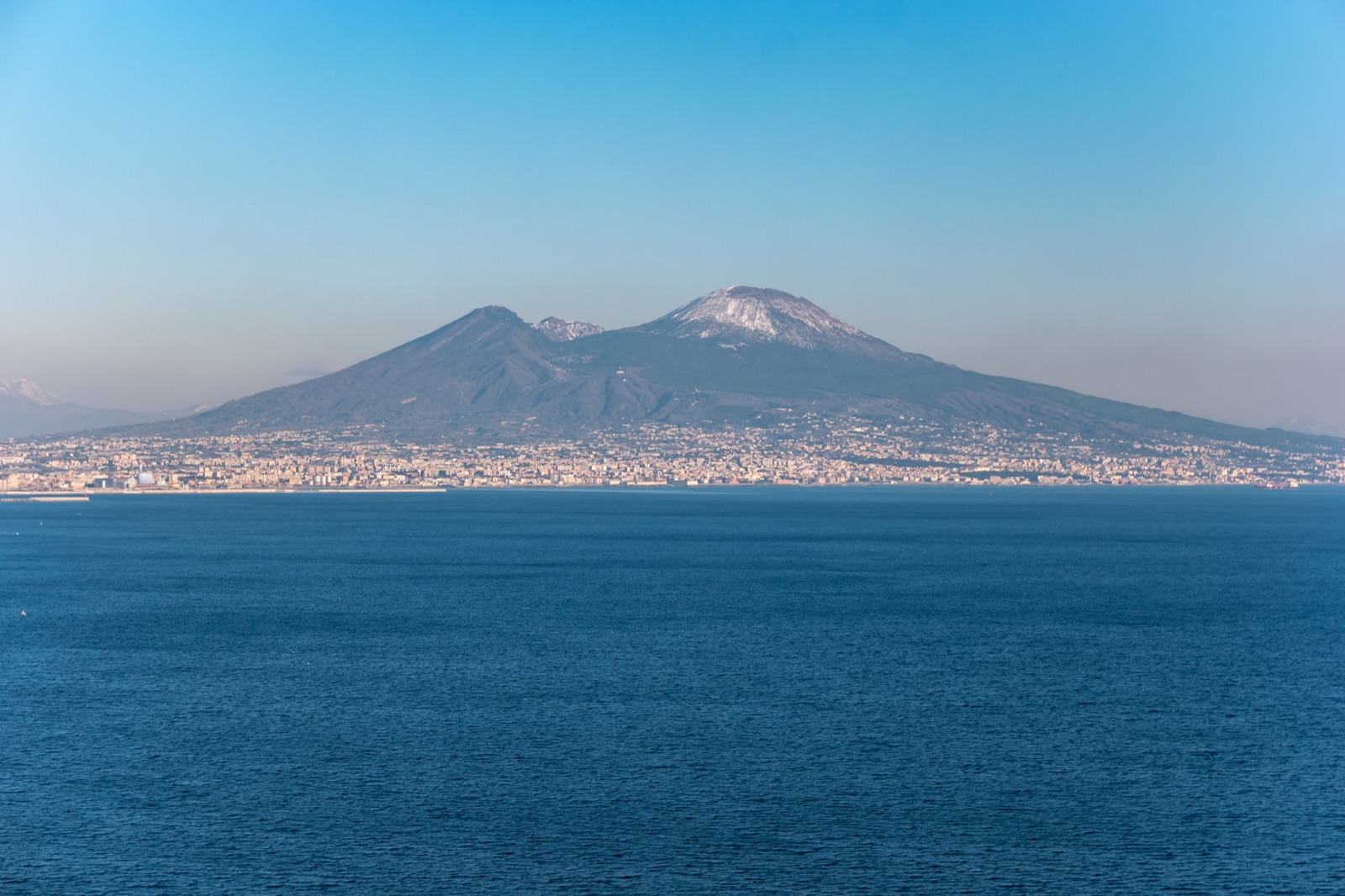
Herculaneum (Ercolano in Italian) is the Roman town that Vesuvius buried in AD 79, on the coast at the western foot of the volcano between Naples and Pompeii. It is much smaller than Pompeii, but it was buried in a different way, under about 20 m of volcanic material, and that preserved things Pompeii lost: wooden doors and stairs, furniture, food, and the skeletons of hundreds of people who died waiting on the beach.
Visiting is straightforward. The archaeological park is a 6-minute walk from Ercolano Scavi station on the Circumvesuviana railway between Naples and Sorrento, a full ticket costs €16, and it is open every day except 25 December. The same station is where the private Vesuvio Express shuttle leaves for the crater, which makes Herculaneum the easiest of the ruins to pair with the volcano. Prices and hours below are as published on the park’s own site at the end of September 2026; check before you go.
Herculaneum at a glance
- Where: the modern town of Ercolano, on the Bay of Naples at the foot of Vesuvius. The entrance is at Corso Resina 187.
- Getting there: the Circumvesuviana (Naples–Sorrento line) to Ercolano Scavi, then 6 minutes on foot.
- Tickets: €16 full price; €2 for young people aged 18 to 24; free on the first Sunday of every month.
- Hours: 8:30–19:30 from 16 March to 14 October (last entry 18:00); 8:30–17:00 from 15 October to 15 March (last entry 15:30).
- Open: Monday to Sunday; closed on 25 December.
- Closed inside the site for now: the Villa of the Papyri and the ancient theatre.
Herculaneum and Vesuvius: how they connect
Herculaneum is not part of the volcano. It is an archaeological park at sea level in the town of Ercolano, and the crater is a separate trip up the mountain behind it. What links them is history and transport.
The history is the eruption of AD 79, which destroyed Herculaneum, Pompeii and Stabiae. Our article on the Vesuvius eruption of AD 79 tells that story in full, including the date debate.
The transport link is Ercolano Scavi station. From the station square the Vesuvio Express, a private shuttle, takes visitors up to the crater entrance at about 1,000 m. Note that the public EAV bus 808, which climbs the mountain from Pompeii, does not stop at Ercolano Scavi. Our guide on how to get to Vesuvius compares all the options.
A small Roman town by the sea
Ancient Herculaneum stood on a plateau overlooking the sea, bounded on the east and west by two streams, with Vesuvius rising behind it. According to myth it was founded by Hercules on his way back from Iberia; the ancient writer Strabo instead traced it to several phases of settlement by different Italic peoples. It rebelled against Rome but was conquered for good in 89 BC and became a Roman municipium.
It was never large. The park gives it about 20 hectares inside its walls, a grid of streets, and an estimated population of about 4,000. In the age of Augustus, like many towns in the empire, it enjoyed a building boom, with public buildings such as the theatre and the Basilica of Nonius Balbus restored. UNESCO describes it as a holiday resort, in contrast to the busy commercial town of Pompeii.
A devastating earthquake in AD 62 caused significant damage. Seventeen years later, the eruption buried the town for good.
How Herculaneum was buried
The eruption reached Herculaneum in a different way from Pompeii. Pompeii lay downwind of the great eruption column and was first buried by falling pumice, which collapsed roofs and trapped people indoors.
Herculaneum, on the other side of the mountain, was struck by the next phase. The park describes glowing clouds at a temperature of about 400 degrees, travelling at over 80 km an hour, followed by mudflows that buried the town under about 20 m of volcanic material. Living things died instantly from the heat, and organic material was carbonised rather than left to rot.
That combination, intense heat followed by a deep, sealing blanket, is why Herculaneum preserves things that almost never survive from the ancient world.
What survives at Herculaneum
The park’s list of organic finds reads like an inventory of a Roman household:
- Wood: furniture, sculptures, tools such as a press, doors, stairs, lintels and partition walls, and small boats, one of them found during the excavation of the ancient beach.
- Food: many kinds of seeds, cereals and fruit.
- Textiles and ropes.
- Writing: wax tablets recovered from several houses, and papyri, most of them from the Villa of the Papyri. Together with inscriptions and graffiti, they document the town’s social, commercial and legal life. Thanks to them, the names of many of the adult free men who lived in Herculaneum in the years before the eruption are known, along with those of many women.
One of the most remarkable finds came from excavation along the ancient beach, where the collapsed roof of a room from the House of the Telephus Relief was uncovered. Its wooden ceiling was not even carbonised: a coffered ceiling, inlaid and carved with geometric reliefs, with traces of gilding and paint in red, white, blue and black.
The beach, and the people who waited for boats
The most affecting part of Herculaneum is its ancient shoreline. In the 1980s, inside the arches that opened onto the beach, excavators found the bodies of more than three hundred people who had left their homes on the night of the eruption and fled towards the sea, hoping for rescue. A glowing cloud ended that hope.
Among them was a young pregnant woman close to giving birth, and another woman, richly adorned with earrings, rings and bracelets, whom the press of the day called the “Lady of the Jewels”.
The most important find on the ancient beach came on 3 August 1982, when the keel of an overturned boat began to emerge from the volcanic mud in front of the Suburban Baths. More than 9 m long and similar to a modern gozzo, a traditional wooden fishing boat, it was crewed by three pairs of rowers and steered by a helmsman. The park’s latest interpretation is that it may have been a military boat from the fleet commanded by Pliny the Elder, sent from Misenum to help the threatened town. Close by lay the skeleton of an officer, still wearing a belt with a sword and a dagger.
Rediscovery and excavation
Herculaneum’s depth shaped the way it was dug up. The town was rediscovered in the eighteenth century, when the Bourbon kings of Naples had it explored through shafts and underground tunnels. Open-air excavation began in 1828 and continued until 1875. After a long gap, work resumed in 1927 under the archaeologist Amedeo Maiuri, who led it until 1958. Further campaigns in the twentieth century and the early years of this one uncovered much of the town’s seafront and a small part of the Villa of the Papyri.
What you can see today, and what is closed
The excavated area is compact, and you can walk it at your own pace. Highlights include:
- The streets and houses. The regular grid of main streets and cross-streets, with wooden doors, stairs and lintels surviving in places.
- The ancient beach and its arches, where the victims of the eruption were found.
- The Suburban Baths, described by the park as the best-preserved bath complex of the Roman world. They were closed to the public for more than twenty years and can now be seen on special guided visits to the restoration site (see below).
Two major monuments are closed at the time of writing. The Villa of the Papyri is closed for excavation, maintenance and accessibility works, and no reopening date has yet been set. The ancient theatre will stay closed until a date still to be set, for urgent maintenance work. Check the park’s notices before you go if either is important to you.
Tickets and opening hours
These are the times and prices published on the park’s site at the end of September 2026. The winter timetable starts on 15 October.
| Season | Opening hours | Last entry | Leave the site by |
|---|---|---|---|
| 16 March to 14 October | 8:30–19:30 | 18:00 | 19:00 |
| 15 October to 15 March | 8:30–17:00 | 15:30 | 16:40 |
The closing times refer to the park’s gates on Corso Resina and Via dei Papiri Ercolanesi, so leave enough time to walk to an exit.
- Full ticket: €16.
- Young people aged 18 to 24: €2.
- Free entry: for those entitled by law, and for everyone on the first Sunday of every month and on 25 April, 2 June and 4 November. On those days free tickets are collected at the ticket office on the day; they cannot be booked online.
- Children: visitors under 12 must be accompanied.
- Your ticket: show it at the entrance on your phone as a QR code or printed out.
- Campania Artecard: the regional pass can be used for entry, but holders must go to the ticket office to activate it.
Tickets can be bought online or at the ticket office. Prices and hours change from time to time, so check the park’s site shortly before your visit.
Suburban Baths visits, October to December 2026
From October to December 2026 the park runs weekly guided visits to the restoration site of the Suburban Baths, on Saturdays. This is not a permanent reopening but a chance to see the rooms and the conservation work while it is under way.
- Groups: at most 15 people, led by park staff. The visit lasts about an hour, and because it is a working site everyone wears a hard hat.
- In English: at 10:30 and 15:30.
- Tickets: a combined ticket for the archaeological park and the baths costs €21; visitors aged 18 to 25 from the EU (and from other countries with reciprocal arrangements) pay €7; under-18s go free.
- Where: the meeting point is the Terrace of Marcus Nonius Balbus inside the site.
The route takes in the frigidarium, the tepidarium with its stucco warriors, the calidarium with a marble basin overturned by the eruption, and a heated pool. Places are limited, so book ahead if this is the reason for your visit.
Getting there
By train. From Napoli Centrale, buy a ticket to Ercolano Scavi and take the Circumvesuviana on the Naples–Sorrento line. From the station it is 6 minutes on foot to the park entrance at Corso Resina 187. From Sorrento or Pompeii, take the same line in the other direction. From Naples airport, the park suggests a taxi, or the Alibus to the central station and then the Circumvesuviana.
By car. Take the A3 Naples–Salerno motorway and leave at the Ercolano Scavi exit, then follow the signs for the archaeological park. Besides several private car parks in the area, the council car park on Viale dei Papiri Ercolanesi is open.
On a tour. A full-day minibus tour from Naples covers the Great Cone of Vesuvius, Pompeii with an audio guide and a walk around Herculaneum in 7.5–8.5 hours. It is the simplest way to see all three in one day, at the cost of a fixed timetable at each.
Herculaneum or Pompeii?
If you only have time for one, the choice comes down to what you want to see.
UNESCO puts the difference well: the vast expanse of the commercial town of Pompeii against the smaller but better-preserved remains of Herculaneum.
Choose Herculaneum if you are short of time, you want to see how a Roman house was actually built and furnished, or you want to pair the ruins with the crater using the Vesuvio Express from Ercolano. At about 20 hectares inside its walls, it is far easier to see properly in half a day.
Choose Pompeii if you want the scale of a whole Roman city and the plaster casts of its victims. It is much larger and needs more time.
See both if you have two days. Our guide to Vesuvius and Pompeii in one day explains how each site fits with the crater.
Pairing Herculaneum with the crater
Ercolano is the natural base for a day that combines the volcano with the ruins, because the shuttle to the crater and the entrance to the archaeological park both start near the same station.
- Book the crater first. The crater path is by timed ticket bought online; our guide to crater tickets and the Gran Cono path explains the rules.
- Do the volcano in the morning. Take the Vesuvio Express from the station square up to the entrance at about 1,000 m, walk the crater path, and come back down.
- Visit Herculaneum in the afternoon. Watch the last entry: 18:00 until 14 October, and 15:30 from 15 October.
- Or let someone else plan it. A transfer with entry to the crater from Pompeii or Naples takes about 3 hours and leaves the afternoon free for Herculaneum; the full-day tour from Naples covers all three sites.
Tips for the visit
- Download the park’s app. Ercolano Digitale offers multimedia content and personalised routes around the site.
- Keep your ticket. You show it at the entrance, on your phone or printed, and it is registered at the turnstile, so keep it to hand.
- Check what is open. With the Villa of the Papyri and the theatre closed, look at the park’s notices before you go, especially if you are travelling for one monument in particular.
- Mind the closing time. The published closing times are for the gates, and the site must be left before them, not at them.
- Combine thoughtfully. Herculaneum and the crater together make a full but manageable day; adding Pompeii as well is easier on a tour than on your own.
Frequently asked questions
How much does it cost to visit Herculaneum?
A full ticket is €16, and young people aged 18 to 24 pay €2. Entry is free on the first Sunday of every month and on 25 April, 2 June and 4 November. The combined ticket with the Suburban Baths visits (October to December 2026) costs €21.
How long do you need at Herculaneum?
The excavated area is compact, so a morning or an afternoon is enough to see the streets, the houses and the ancient beach without rushing. Add time for the Suburban Baths visit, which lasts about an hour, if you book one.
Is Herculaneum better than Pompeii?
Neither is better; they are different. Herculaneum is smaller and better preserved, with wooden fittings, food remains and the victims on the beach. Pompeii is a much larger city with the famous plaster casts. If you have time, see both.
How do I get to Herculaneum from Naples?
Take the Circumvesuviana from Napoli Centrale on the Naples–Sorrento line and get off at Ercolano Scavi. The park entrance at Corso Resina 187 is 6 minutes’ walk from the station.
Can I visit Herculaneum and Vesuvius on the same day?
Yes. From Ercolano Scavi station the private Vesuvio Express shuttle goes up to the crater entrance at about 1,000 m, so you can walk the crater in the morning and see the ruins in the afternoon. Book the crater ticket first and watch Herculaneum’s last entry time.
Is Herculaneum open on Mondays?
Yes. The park is open Monday to Sunday and closes only on 25 December. Hours change on 15 October and 16 March, so check which timetable applies to your visit.